18L Ultrasonic Tower Humidifier: Quiet Mist for Big Rooms
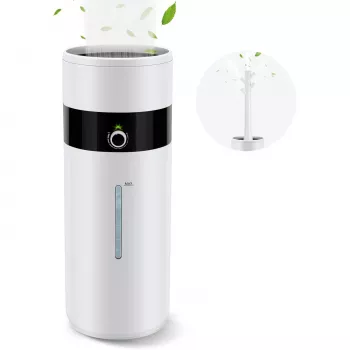
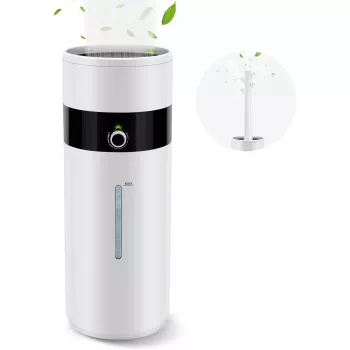
18L Ultrasonic Tower Humidifier for Large Rooms: Quiet Whole-Room Moisture in a Slim Tower
Dry air can make a room feel colder, irritate sinuses and skin, and lead to static and stressed houseplants. An ultrasonic tower humidifier is designed to add fine mist efficiently while staying quiet and unobtrusive—especially useful in bedrooms, living rooms, and open-plan spaces. This guide breaks down what to look for, how to size and place a tower unit, and how an 18L capacity model fits into day-to-day use in larger rooms. For more guidance, see Humidifier Safety.
Why a tower-style ultrasonic humidifier works well in bigger rooms
Large rooms are harder to keep comfortable because there’s simply more air volume to condition—and the air doesn’t always mix evenly. Tower-style ultrasonic humidifiers help bridge that gap with a design that supports steadier, room-wide moisture. For further reading, see 4 Best Humidifiers of 2026.
- Ultrasonic misting creates a fine, cool mist using high-frequency vibration, typically producing less noise than many evaporative designs.
- The tower form factor helps distribute mist higher into the room, which can improve mixing with the air compared with very low-profile units.
- Large tanks reduce refill frequency—helpful for overnight use, multi-room living areas, and busy households.
- Cool-mist humidification avoids warming the room and can feel more comfortable during sleep.
Quick fit check: room size, humidity goals, and run-time expectations
Before choosing a large-capacity unit, it helps to confirm what your space actually needs: a stronger output, longer run time, or simply better placement and airflow.
- Room size: larger spaces generally need higher output and/or longer run times to maintain a steady humidity level.
- Target humidity: many homes aim for a comfortable range around 30–50% relative humidity; a hygrometer helps confirm actual conditions.
- Run time: a higher-capacity tank can support longer continuous use, which is useful for overnight comfort without waking for refills.
- Seasonal factors: heating in winter often dries indoor air; summer air conditioning can also reduce indoor humidity.
Sizing and daily-use checklist for rooms
| What to check | Why it matters | Practical tip |
|---|---|---|
| Room volume (square footage + ceiling height) | Bigger air volume needs more moisture output | Open doors and hallways effectively increase the space to humidify |
| Current humidity reading | Shows whether the room is mildly dry or very dry | Measure morning and evening for a more accurate picture |
| Refill tolerance | Determines whether a small tank is acceptable | If refilling daily is a hassle, prioritize larger capacity |
| Placement options | Affects mist distribution and safety | Keep mist away from electronics, artwork, and direct contact with walls |
Product spotlight: 18L Ultrasonic Tower Humidifier for Large Rooms
If the goal is steady moisture in a larger space without constant refills, a high-capacity tank can change the day-to-day experience. The 18L Ultrasonic Tower Humidifier for Large Rooms is designed for extended operation in a slim, floor-friendly tower footprint.
- Large 18L capacity is suited to extended operation, reducing how often the tank needs refilling.
- Slim tower design helps fit into corners or alongside furniture while still projecting mist upward into the room.
- Ultrasonic operation is typically chosen for low-noise misting, making it a practical option for bedrooms and nurseries (with appropriate placement).
- Best-use match: large bedrooms, living rooms, studios, and other spaces where steady humidity is preferred over frequent manual top-ups.
Where to place a tower humidifier for even coverage
Placement has a bigger effect than many people expect. A strong unit aimed poorly can cause damp spots, while a modest setting in a smart location can feel more comfortable across the room.
- Choose a stable, level surface or floor location where the unit won’t be bumped; keep it away from edges and walkways.
- Allow clearance around air intakes/outlets so mist can disperse rather than condense nearby.
- Avoid aiming mist directly at walls, curtains, bedding, upholstered furniture, wood floors, or electronics to reduce the risk of damp spots.
- If the room has airflow patterns (HVAC vents, ceiling fans), position the humidifier so the mist can mix gently rather than being blown straight into one area.
Daily operation tips: getting comfortable humidity without overdoing it
Humidifiers are most comfortable when they’re controlled. Too little moisture won’t help dryness; too much can lead to condensation and a clammy feel.
For general indoor humidity guidance, reference resources like the EPA’s indoor humidity overview.
Water quality and white dust: what to expect with ultrasonic mist
Cleaning and maintenance routine for consistent mist output
For health-focused use-and-care guidance, the CDC humidifier care recommendations are a solid reference point.
Comfort pairing: using airflow to distribute humidity
If your room needs quiet circulation to balance temperature and moisture, the Bladeless Ceiling Fan with Light and Remote can be a practical pairing for smoothing out airflow without blasting mist into one spot.
Who benefits most from an 18L tower humidifier
FAQ
How long can an 18L humidifier run before refilling?
Run time depends on your mist setting, how dry the room is, and your target humidity. With an 18L tank, many households can run through the night and often longer at moderate output, especially once the room reaches a stable humidity level.
Is ultrasonic mist safe to use every night in a bedroom?
Many people use cool-mist ultrasonic humidifiers nightly. The key is to monitor humidity with a hygrometer, avoid persistent condensation, place the unit away from bedding and electronics, and keep up with regular cleaning.
How can white dust be reduced with an ultrasonic humidifier?
Distilled or demineralized water is typically the most effective way to reduce white dust. If hard water is unavoidable, more frequent cleaning/descaling and wiping nearby surfaces can help manage mineral residue.









Leave a comment