Airless Spray Gun, Hose Kit & Extension Rod: Setup Tips
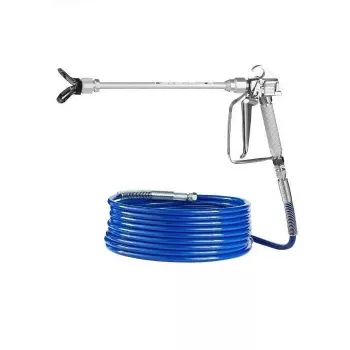
High Pressure Airless Paint Spray Gun & Hose Kit with Extension Rod: Reach, Control, and a Cleaner Finish
A high pressure airless spray setup can speed up large paint jobs while keeping coverage consistent—especially when paired with a hose kit and an extension rod for ceilings, high walls, fences, and wide exterior surfaces. The right combination of gun, hose, and extension helps maintain a steady distance, improves control in awkward areas, and reduces stop-and-go ladder work that often leads to uneven film build.
What This Kit Helps With
- Faster coverage on broad surfaces such as siding, garages, fences, decks, and long interior walls
- Improved reach with an extension rod to reduce ladder time and awkward overhead spraying
- More consistent film build compared with repeated rolling on textured or porous materials
- Better access to tight areas when the hose length allows the pump to stay in one place
Key Parts and How They Work Together
- Spray gun: the trigger-controlled handle that houses the filter (if included) and connects to the hose
- High-pressure hose: carries material from the pump to the gun; flexibility and length affect handling and fatigue
- Extension rod: moves the spray tip farther from the hand for safer, steadier overhead and high-wall passes
- Tip guard and tip (varies by setup): protects the user and helps control fan width; tip size must match coating viscosity
- Fittings: ensure leak-free connections; correct thread type and tight seating are essential under high pressure
Common Use Cases and Practical Setup Notes
| Job type | Why the extension rod helps | Technique reminders |
|---|---|---|
| Ceilings and soffits | Keeps spray distance steady without overreaching | Maintain a consistent 10–12 in. distance and overlap passes about 50% |
| High interior walls and stairwells | Reduces ladder repositioning | Start moving before triggering; release trigger before stopping movement |
| Exterior siding and fences | Improves reach along long runs | Work in sections; keep the gun perpendicular to surface to avoid heavy edges |
| Garage doors and large panels | Better control on broad flat planes | Use steady, parallel strokes; avoid arcing at the end of each pass |
Compatibility Checklist Before Buying or Connecting
- Confirm the spray gun and hose fittings match the pump outlet thread type and size
- Verify the hose pressure rating meets or exceeds the sprayer’s maximum operating pressure
- Ensure the extension rod length and connection style match the gun/guard assembly
- Check whether a gun filter is needed for the coating and tip size; filtration reduces tip clogs
- Plan for the coatings being sprayed (primers, stains, latex paints) and ensure the sprayer pump can handle them
Small mismatches matter more with airless equipment than with low-pressure tools. A fitting that feels “close enough” can weep under load, and a hose that’s under-rated can fail. If a coating is thick (many exterior acrylics, elastomerics, or heavy primers), tip selection and filtration become even more important to keep the fan clean and reduce downtime.
Setup Steps for a Smooth First Spray
- Inspect hose and fittings for cuts, kinks, or worn threads before pressurizing.
- Connect hose to pump and gun, tighten firmly (do not overtighten into damaged threads).
- Prime the sprayer according to the pump instructions; circulate material until air is purged.
- Test spray on cardboard or masking paper; adjust pressure only high enough to eliminate tails in the fan.
- Practice consistent distance and speed; a steady pace prevents runs and dry spray.
A useful pressure check is the spray fan: if you see “tails” (heavy edges and a weak center), bump pressure in small steps until the fan evens out. If the fan is clean but you’re creating fog and bounce-back, the pressure is higher than needed.
Getting an Even Finish: Technique That Reduces Runs and Overspray
- Keep the tip perpendicular to the surface; arcing causes heavier paint at the ends of each pass.
- Overlap each pass about 50% for uniform coverage.
- Use the lowest effective pressure for the coating and tip to reduce overspray and wear.
- For edges and corners, reduce speed and feather the trigger to avoid buildup.
- Back-roll or back-brush when required for adhesion and uniformity on porous substrates (e.g., raw wood, masonry).
Cleaning and Maintenance to Prevent Clogs and Leaks
Safety Essentials for High-Pressure Spraying
For authoritative guidance on safe spraying practices, review OSHA’s resources on spraying operations and exposure controls (OSHA) and respiratory protection selection and use (NIOSH). If working indoors, it also helps to understand VOC behavior and ventilation basics (EPA).
When an Extension Rod Makes the Biggest Difference
In-Stock Picks to Get Started
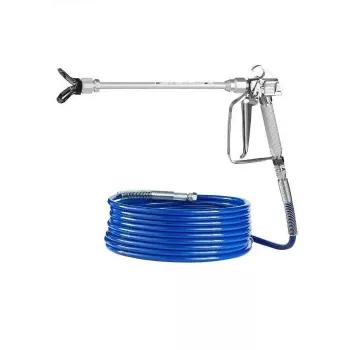
- High Pressure Airless Paint Spray Gun & Hose Kit with Extension Rod — a practical combination for reach, steady overhead passes, and fewer ladder moves.
- 26.7in Bladeless Ceiling Fan with Light and Remote, Low Profile Modern Fandelier — a smart add-on for garages or workshops where improved airflow and lighting make prep and cleanup more comfortable.
FAQ
How much pressure should be used with an airless spray gun and hose kit?
Use the lowest pressure that produces a clean, even fan without tails. Start low, test on cardboard, and increase gradually until the pattern looks uniform for your coating and tip size.
Do extension rods affect spray pattern or control?
They can improve consistency by stabilizing distance on ceilings and high walls, but they add leverage. Keep a firm two-hand hold when needed and stay perpendicular to the surface to avoid heavy edges.
What causes clogs or spitting during airless spraying?
Common causes include debris in the paint, inadequate filtration, dried paint in the tip or guard, or pressure that’s too low for the selected tip and coating. Strain paint when needed and flush and clean immediately after use.










Leave a comment