Finally Focused: Stop Procrastinating With a Weekly Plan

Finally Focused: A Practical Anti-Procrastination Workbook for Building Momentum
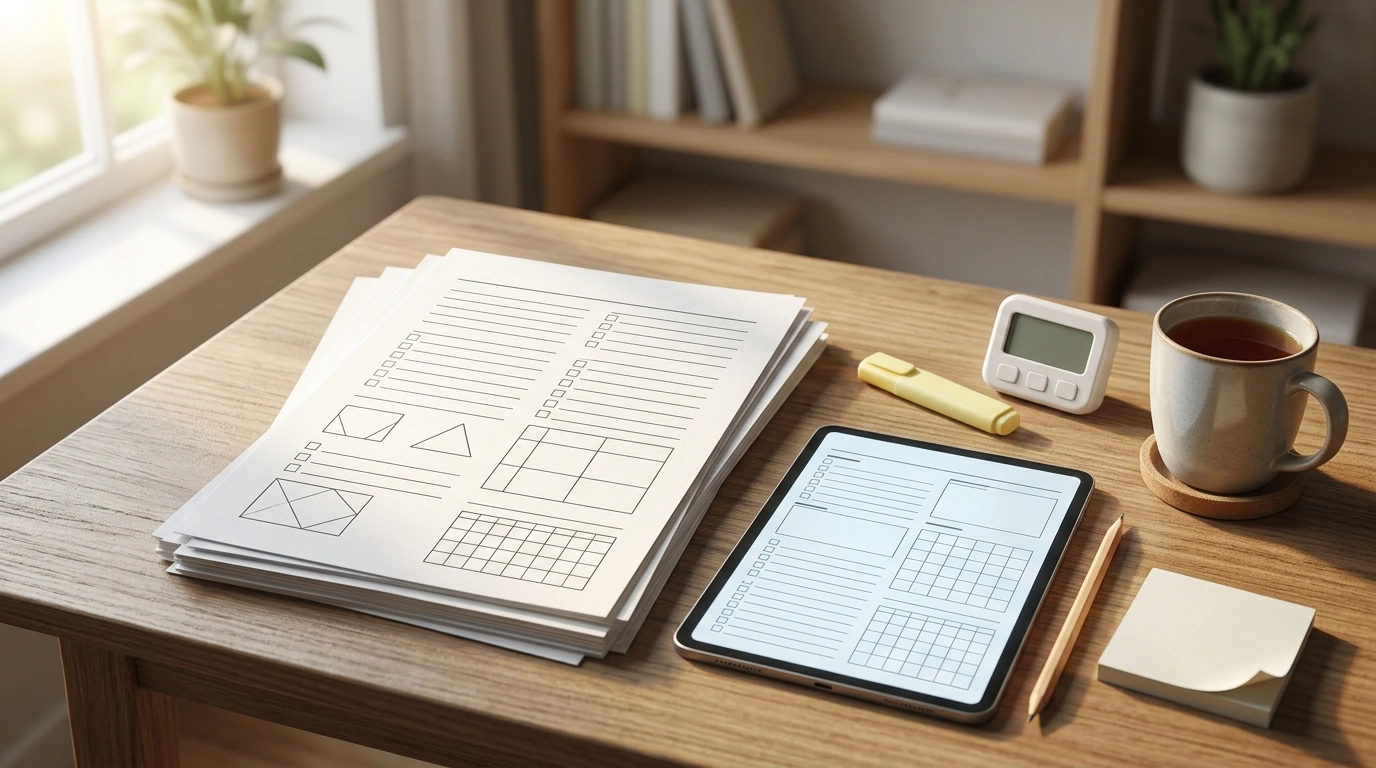
Procrastination usually isn’t a motivation problem—it’s a friction problem. When a task feels unclear, too big, or emotionally loaded, the brain looks for quick relief and postpones the work. Finally Focused: The Anti-Procrastination Workbook – Productivity Ebook & Focus-Building Guide with Time Management Tools is a structured productivity workbook designed to help turn vague intentions into next actions, build repeatable focus habits, and use time management tools that make progress feel simpler and more automatic.
Instead of relying on willpower, it leans on practical systems: clearer next steps, realistic scheduling, small starts, and quick reflection—so you can keep moving even when you don’t “feel like it.”
What This Workbook Helps With (and Who It Fits Best)
- If you keep planning but don’t start: it turns “I should” into clear, small actions that are easier to begin.
- If your days are packed and interrupted: it introduces simple time-blocking and prioritization routines to protect focus windows.
- If perfectionism triggers avoidance: it uses low-stakes starts, short work sprints, and reflection prompts to reduce emotional resistance.
- If follow-through is inconsistent: it supports habit-building with repeatable check-ins and a focus plan that can be reused weekly.
How Procrastination Works: Triggers, Friction, and “Future You”
Procrastination is commonly defined as the voluntary delay of an intended action despite expecting to be worse off for the delay (see the American Psychological Association’s definition). In day-to-day life, that delay usually shows up when a task carries uncertainty, discomfort, or too many choices.
- Common triggers: unclear next step, fear of doing it wrong, boredom, task size, and competing rewards from notifications or easy entertainment.
- Friction audit: identify what makes a task hard to start (missing materials, decision overload, too many options, environment, time uncertainty).
- Time inconsistency: the brain favors immediate comfort over delayed rewards; tools here emphasize immediate wins (tiny starts, visible progress).
- Replace willpower with systems: consistent cues, simple rules, and pre-decisions reduce the number of “should I?” moments.
That “pre-decision” approach pairs well with what researchers call implementation intentions—simple if/then plans that make follow-through more automatic (overview: Gollwitzer on implementation intentions).
What’s Inside Finally Focused
- Guided exercises to define priorities, clarify outcomes, and translate goals into next actions.
- Time management tools that encourage realistic scheduling—planning for energy, not just available hours.
- Focus-building routines designed for short sessions and gradual expansion of attention span.
- Reflection prompts to identify what worked, what didn’t, and what to adjust—without turning the process into self-criticism.
- A repeatable structure you can use as a reset whenever procrastination returns.
Over time, repeating the same workflow supports habit formation—automaticity grows through consistent repetition (see: Lally et al., 2010).
A Simple Weekly Workflow Using the Workbook
The most reliable way to beat procrastination is to shrink the “activation energy” required to start. This weekly workflow does that by limiting what you commit to, making the first step physical and obvious, and protecting time for real progress.
Weekly Workflow Snapshot
| Stage | Purpose | Example |
|---|---|---|
| Weekly outcomes | Aim attention at what matters most | Finish project outline; schedule appointments; submit one application |
| Next actions | Remove ambiguity and reduce resistance | Open document and write 5 bullet points; draft first paragraph |
| Time blocks | Protect focus and prevent overbooking | 2× 45-minute deep blocks; 1× 30-minute admin block |
| Work sprints | Make starting automatic | 10–20 minutes to begin; extend if momentum is strong |
| Review | Learn quickly and adjust without guilt | Obstacle: phone distractions → Adjustment: notifications off during deep block |
- Step 1: Pick 1–3 outcomes for the week (not 20 tasks). Define “done” in observable terms.
- Step 2: Break each outcome into the first physical next step (open file, draft outline, gather materials, send one message).
- Step 3: Create two kinds of time blocks: deep-focus blocks (single task) and admin blocks (email, scheduling, quick errands).
- Step 4: Use short work sprints to start—momentum first, duration second. Increase sprint length only when starting feels easy.
- Step 5: End-of-day review: note one win, one obstacle, and one adjustment for tomorrow.
Time Management Tools That Reduce Overwhelm
If you like having a simple, physical reminder of focus windows (without adding more apps), a timepiece can reinforce the boundary between “deep block” and “admin block.” An option to consider: Elegant Women’s Quartz Watch with Sapphire Crystal & Luminous Dial.
Focus-Building Techniques for Real Life (Not Perfect Conditions)
For home offices where temperature and airflow affect concentration, improving comfort can make it easier to stay seated and finish a sprint. A low-profile option: 26.7in Bladeless Ceiling Fan with Light and Remote, Low Profile Modern Fandelier.
Who Should Consider a Workbook Format (Instead of Another App)
Getting Started in 30 Minutes
If you want a guided format that walks you through these steps (and makes it easy to repeat weekly), start here: Finally Focused: The Anti-Procrastination Workbook – Productivity Ebook & Focus-Building Guide with Time Management Tools.
FAQ
How is this different from a typical productivity planner?
It focuses on reducing task resistance with guided prompts, friction audits, and “next action” planning, rather than mainly providing dated pages for listing tasks. The goal is consistent follow-through, even when motivation is low.
Is it useful if there are frequent interruptions during the day?
Yes—short focus blocks, buffers between tasks, and quick restart rituals are designed for stop-and-go schedules. Separating deep-focus time from admin blocks also helps interruptions land in less disruptive windows.
How quickly can results show up?
Many people notice an immediate lift once tasks are clarified into small next actions and started with short sprints. More durable results typically build over a few weeks of repeating the weekly workflow and using the reflection prompts to adjust.











Leave a comment