Pack Light Every Time: Minimalist Digital Packing Planner
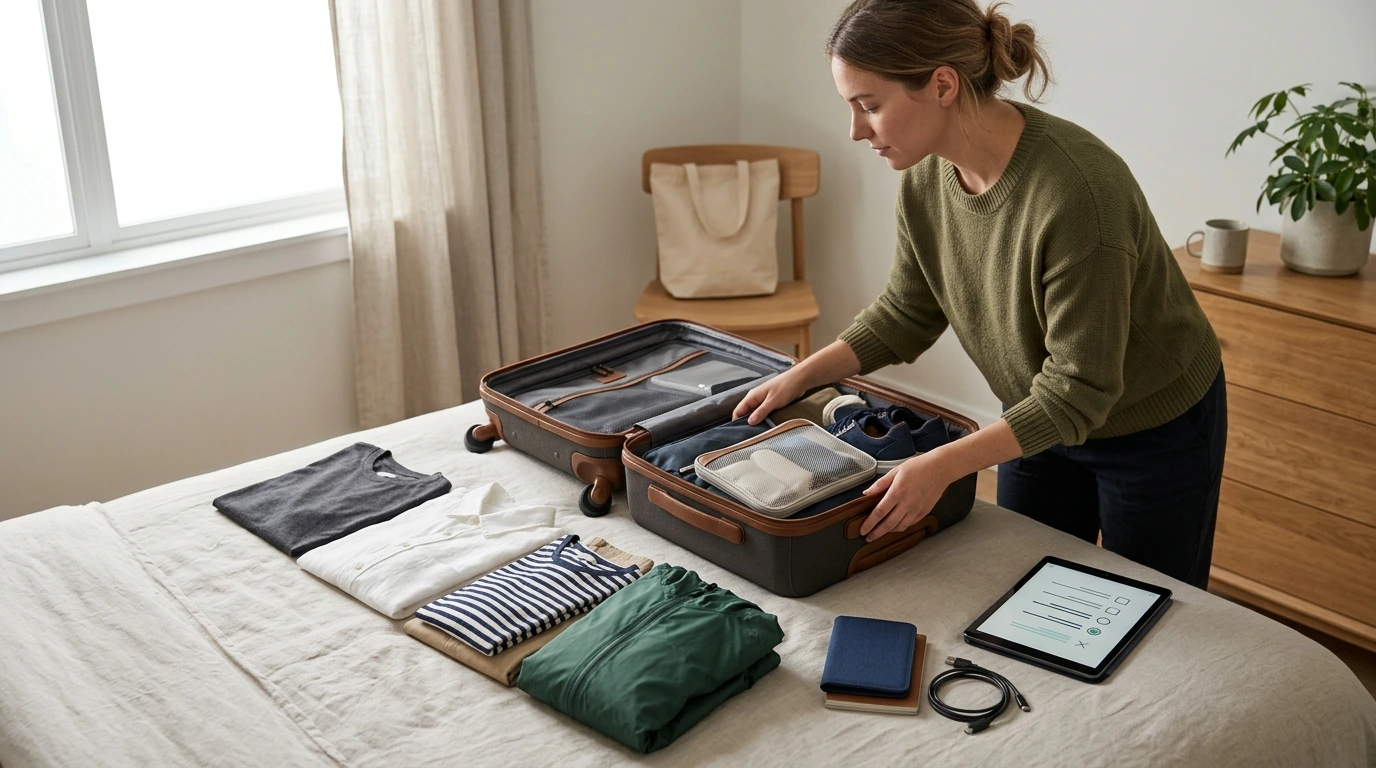
Minimalist Travel Packing Planner: A Digital Guide for Light, Smart, Stress-Free Trips
Packing light gets easier when every item has a purpose and every choice matches the trip’s schedule, climate, and activities. A minimalist packing system removes guesswork with clear checklists, outfit planning, and last-minute reminders—so bags stay small, essentials stay covered, and departure day feels calm.
What “minimalist packing” actually means
Minimalist packing isn’t about deprivation; it’s about bringing fewer, better items that work together. The goal is a compact kit that covers real needs without the “maybe” pile.
- Pack for repeatable outfits, not individual days: a small set of mix-and-match tops, bottoms, and one layering piece.
- Choose multi-use items: shoes that handle most walking, a jacket that manages light rain and cool evenings, and toiletries that do double duty.
- Limit “just in case” duplicates: keep one backup plan (like one extra base layer) instead of multiple extras.
- Aim for a carry-on plus a personal item when possible: fewer fees, faster airport time, and less lost-luggage risk.
How a digital packing planner simplifies the process
A digital planner turns packing into a repeatable workflow: decide, check, pack, and go—without starting from zero each trip.
- Turns a vague to-do into a step-by-step plan: essentials, clothing, toiletries, tech, documents, and trip-specific add-ons.
- Supports “pack once, reuse often”: save a master list and duplicate it for weekend trips, work travel, or long vacations.
- Reduces overpacking by visualizing outfits and spotting redundant items before they reach the suitcase.
- Makes it easier to coordinate shared items for couples or families (chargers, sunscreen, first aid, adapters).
If you want a ready-to-use template, Minimalist Travel Packing Planner | Digital Packing Guide for Light, Smart & Stress-Free Trips keeps everything in one place—lists, outfit planning, and a last-day checklist—so you can stay consistent across trips.
Start with a trip snapshot (the fastest way to pack less)
Before choosing clothes, define the trip. This “snapshot” prevents the two biggest overpacking triggers: unclear weather expectations and fuzzy plans.
- Define the trip basics: length, destination, weather range, lodging laundry access, and key activities (work, hiking, beach, events).
- Set a bag boundary: carry-on only, one-bag travel, or carry-on + personal item—then pack to fit that limit.
- Pick a simple color palette: 2–3 core colors + 1 accent to multiply outfit combinations.
- Choose “anchor” items first: primary walking shoes, weather layer, and your most specific requirement (meeting attire, dress code, special gear).
For international trips, confirm entry and safety guidance ahead of time via the U.S. Department of State’s travel resources, and check health recommendations on the CDC Travel page.
A minimalist packing framework that fits most trips
This framework scales up or down depending on laundry access and climate. Start here, then add only what your itinerary truly demands.
Minimalist packing checklist (carry-on friendly)
| Category | Core items | Optional add-ons (only if needed) |
|---|---|---|
| Clothing | 4 tops, 2 bottoms, 1 layer, 1 sleepwear, 1 compact rain/wind shell | Swimwear, workout kit, event outfit |
| Shoes | 1 walking shoe | Sandals OR dress shoe (pick one) |
| Toiletries | Travel-size basics, SPF, toothbrush/paste, deodorant | Makeup kit (pared down), razor, hair tools |
| Tech | Phone, charger, power bank, earbuds | Laptop/tablet, adapter, camera |
| Health | Mini first aid, any prescriptions | Motion sickness aids, blister care |
| Documents | ID/passport, wallet, confirmations | Printed copies, spare passport photos |
| Day bag | Packable tote or small crossbody | Collapsible water bottle |
Keep liquids compliant and easy to reach; the TSA’s 3-1-1 liquids rule is a quick refresher when you’re decanting products into travel sizes.
Outfit planning that prevents the “extra items” spiral
Most overpacking is outfit anxiety in disguise. A quick outfit map reduces uncertainty and keeps you from adding “one more” top.
- Build around the most-used shoe: if one pair will be worn 80% of the time, make sure most outfits match it.
- Use a 3×3 method: 3 tops + 3 bottoms can create 9 combinations before layers and accessories.
- Create one buffer outfit: plan a thin base layer + shell for weather swings instead of packing multiple backups.
- Commit to a laundry plan: one sink-wash session or a single laundromat stop can cut clothing volume dramatically.
A small accessory that earns its space is a simple watch—useful for meetings, transit timing, and keeping your phone in your pocket. If you prefer a polished, low-fuss option, consider the Elegant Women’s Quartz Watch with Sapphire Crystal & Luminous Dial.
Packing techniques that keep bags smaller and easier to live from
Common minimalist packing mistakes (and quick fixes)
Using the Minimalist Travel Packing Planner for repeatable trips
That’s the core value of a dedicated template like the Minimalist Travel Packing Planner | Digital Packing Guide for Light, Smart & Stress-Free Trips: it makes your best packing decisions repeatable, so every future trip gets easier.
When packing light matters most
FAQ
How many outfits are enough for a week-long trip when packing light?
A capsule of 3–5 tops, 2–3 bottoms, and 1 versatile layer is usually enough, especially if you plan repeatable combinations. Add one nicer option only if your itinerary requires it, and lean on a simple laundry plan to avoid overpacking.
What should always go in a minimalist carry-on packing list?
Always prioritize documents (ID/passport, payment, confirmations), one primary walking shoe, a weather layer, core toiletries, phone/charger/power bank, and any medications. A single spare clothing component (like one extra base layer) covers most realistic contingencies without adding bulk.
How can a digital packing planner reduce last-minute stress?
Reusable templates and trip-specific customization make it clear what’s already handled and what still needs action. A timed checklist (48 hours/24 hours) also prevents day-of scrambling by surfacing essentials—like charging devices and confirming documents—before it’s too late.












Leave a comment