Memory Boost Worksheets: Printable Recall & Spaced Review
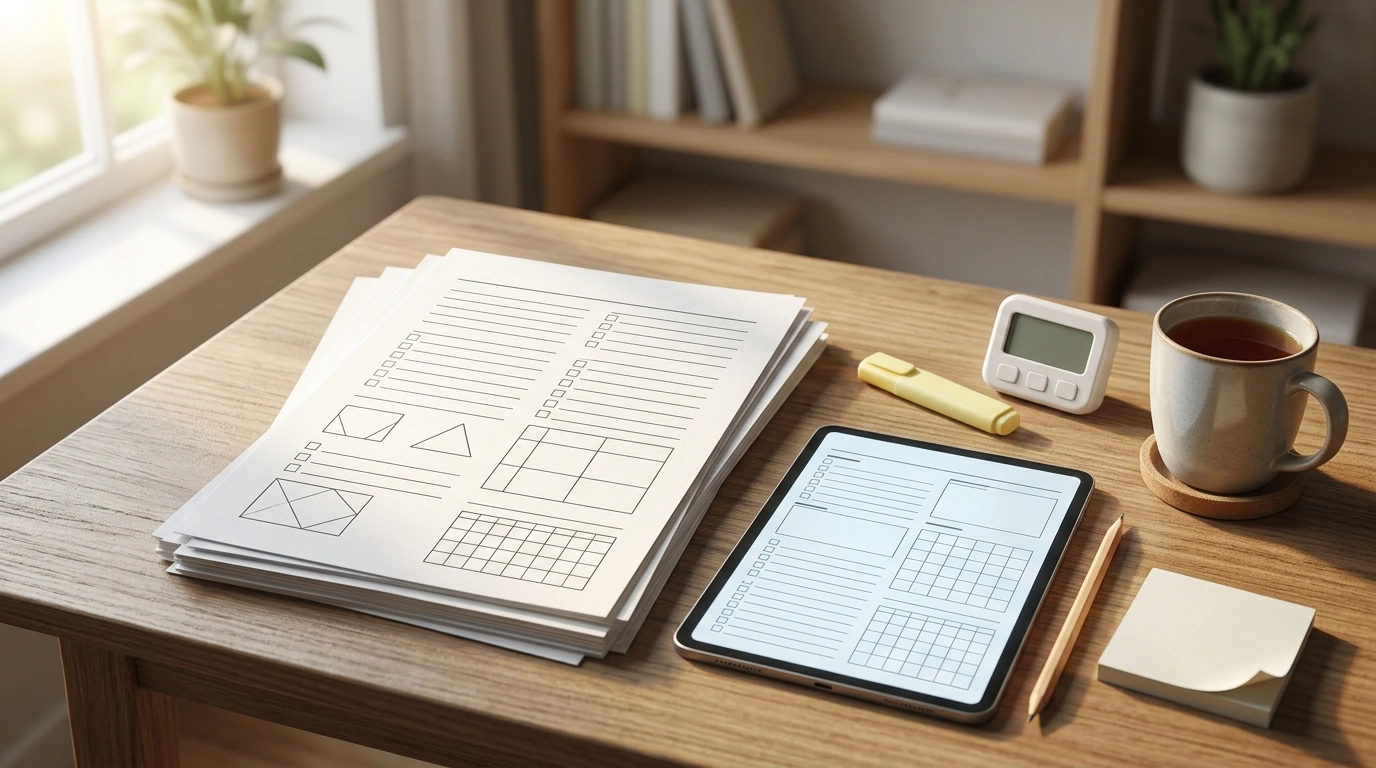
Memory Boost Worksheets for Students and Adults: Printable Exercises, Recall Drills, and Study Tools
Memory improves fastest when practice is structured, repeatable, and easy to fit into real life. Printable and digital worksheets make it simple to train recall, build better study habits, and track progress over time—whether the goal is exams, work performance, or everyday focus. Below are the most useful worksheet types, how to use them for measurable gains, and a weekly plan that keeps progress steady without long study marathons.
Who these worksheets help and what “better memory” looks like
Memory worksheets work best when “better” is defined in practical outcomes—not vague brain training goals. For students, this often means faster studying, stronger retention between sessions, and clearer test-day recall. For adults, it typically shows up as sharper everyday recall (names, appointments, where you left things), stronger working memory, and less mental clutter during busy days.
Helpful targets to measure include fewer rereads, quicker retrieval of key facts, higher quiz scores, and less forgetting after 24–72 hours. Consistency matters more than intensity: short sessions (10–20 minutes) repeated often create stronger results than occasional long sessions.
Core worksheet categories that train memory (and why they work)
Recall practice sheets
These are prompt-and-response pages that force retrieval instead of recognition. Instead of “I’ve seen this before,” you practice “Can I produce it from memory?” That difference is a major driver of durable learning, supported by research on retrieval practice.
Spaced review planners
Spaced review calendars schedule quick reviews before forgetting spikes. The planner does the thinking for you: you follow the schedule, keep reviews short, and let repeated retrieval strengthen long-term storage.
Association builders
Association maps help you connect names, terms, or concepts to vivid cues and categories (sound-alikes, images, locations, or “belongs with” groups). Strong cues make later recall faster and more reliable.
Working-memory drills
Working memory is your mental “scratchpad.” Sequence drills, update tasks, and dual-step prompts build the ability to hold and manipulate information—useful for math, reading comprehension, presentations, and multitasking.
Attention and encoding checklists
Memory starts with encoding: if attention is scattered, storage is weak. Quick checklists (phone away, single task, clear goal, brief timer) improve the quality of the first pass, making later retrieval easier.
For a deeper look at why retrieval and effective study techniques matter, see research on retrieval practice and this review of effective learning techniques. For a straightforward biological overview of memory systems, the NCBI hippocampus and memory overview is a solid reference.
A simple routine: encode, retrieve, space, and mix
The most reliable worksheet-based routine follows four actions that compound over time:
- Encode: convert notes into short cues (keywords, questions, diagrams) instead of long summaries.
- Retrieve: close materials and answer prompts from memory; then check, correct, and rewrite missed items.
- Space: revisit the same material over days (not hours) to build durable retention.
- Mix: rotate topics or problem types so recall becomes flexible, not tied to one context.
Keep difficulty “desirable”: the session should feel effortful (that’s a good sign), but not so hard that accuracy collapses. If you’re missing most prompts, shorten the set, add clearer cues, or reduce time pressure until form improves.
Printable vs digital: choosing the format that fits real life
Weekly brain-training plan (10–20 minutes/day)
| Worksheet type | Best for | How to use (quick method) | Time |
|---|---|---|---|
| Retrieval prompts | Exam prep, factual recall | Answer without notes, then correct and rewrite missed items | 10–15 min |
| Spaced review planner | Long-term retention | Schedule 1–3–7 day reviews; keep sessions short | 2–5 min setup |
| Association maps | Names, vocab, complex concepts | Create vivid links + categories; test recall later the same day | 10 min |
| Working-memory sequences | Focus, mental flexibility | Do 2–3 short sets; stop before form breaks | 5–10 min |
| Error log + reflection | Faster improvement | Track misses, why they happened, and a fix (new cue or example) | 3–5 min |
Study and recall tools that pair well with worksheets
Recommended tools from our shop
If you want a guided system you can reuse daily, start with Memory Boost Worksheets for Students & Adults (Printable Digital Download). It’s designed around repeatable retrieval practice, working-memory drills, attention supports, and progress tracking—so it’s easier to stay consistent for weeks at a time.
To make sessions easier to start and finish on time, a simple time cue helps. An everyday option is Elegant Women’s Quartz Watch with Sapphire Crystal & Luminous Dial, which can support timed retrieval rounds and short breaks without grabbing your phone.
Your environment can also reduce mental fatigue during study. A quieter, comfortable room setup—especially for evening review—can help consistency, and 26.7in Bladeless Ceiling Fan with Light and Remote is an easy way to keep airflow and lighting steady during sessions.
How to get better results in two weeks
FAQ
Are memory worksheets effective for adults as well as students?
Yes. Retrieval practice, spaced review, and attention/encoding supports improve recall across ages, and the biggest difference comes from choosing the right difficulty and practicing consistently.
How often should memory drills be done to see improvement?
Aim for 10–20 minutes most days for about two weeks, using spaced review rather than repeating everything in one sitting. Track a simple metric (accuracy or time-to-recall) so you can see progress and adjust.
Should these exercises be printed or used digitally?
Print if distraction is your main challenge and you want quick, focused repetition; go digital if you need easy duplication and access across devices. Many people get the best results with a hybrid setup: printed daily drills plus a digital planner and progress log.











Leave a comment